
Search Ohio Felony Records
Ohio felony records are kept by the Court of Common Pleas in each of the state's 88 counties. You can search for felony cases online or go to the courthouse in person. The Ohio Bureau of Criminal Investigation maintains the state's central criminal record repository, while each county Clerk of Courts holds local case files. If you need to look up a felony case, find a conviction record, or get copies of court documents, there are several ways to do it. This page covers the main databases, request methods, fees, and legal rules for accessing Ohio felony records.
Ohio Felony Records Overview
Where to Find Ohio Felony Records
Felony records in Ohio come from two main places. The Court of Common Pleas in each county keeps the full case file for every felony tried there. That file holds the indictment, plea documents, motions, trial records, and the sentencing entry. The Clerk of Courts manages these records and can make copies for you. Each of Ohio's 88 counties has its own Common Pleas Court with a General Division that handles all felony criminal cases.
The state also runs a central criminal record system. The Ohio Bureau of Criminal Investigation, part of the Ohio Attorney General's Office, keeps the statewide repository of criminal history records. This database pulls felony conviction data from all 88 counties. A BCI check costs $22 and uses the WebCheck electronic fingerprinting system. You can find a WebCheck location near you through the Attorney General's WebCheck Community Listing. Most county sheriff's offices and many police departments serve as WebCheck sites. FBI background checks are also available for an extra fee if you need national records.
The Ohio Department of Rehabilitation and Correction runs its own Offender Search database. It covers people who are in prison now, those on post-release control, and those who were judicially released. You can search by name, county, or hearing date. This is a good tool when you need to check on someone who was sentenced to prison time for a felony in Ohio.
The Ohio Sex Offender Registry tracks offenders required to register under ORC Chapter 2950. It uses OffenderWatch technology and lets you search by name, address, or zip code. The registry sorts offenders into three tiers based on the crime. Tier I offenders register once a year for 15 years. Tier II register every 180 days for 25 years. Tier III must register every 90 days for life.
You can view the Ohio Attorney General's Law Enforcement Gateway page, which shows how the state shares criminal data among agencies.
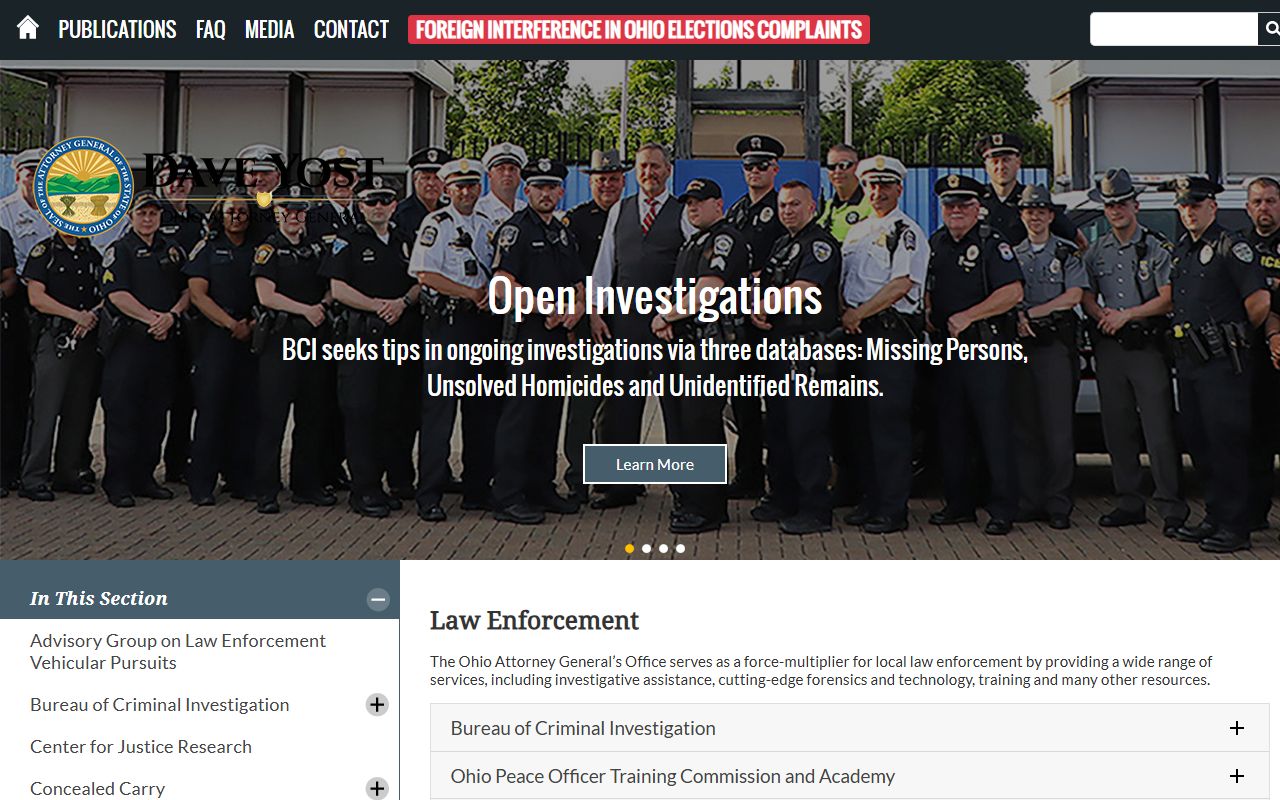
The screenshot above shows the Attorney General's law enforcement resource page. While OHLEG itself is for authorized agencies, the public side explains how Ohio maintains criminal records statewide.
Note: BCI background checks process in 3 to 5 business days for state checks and 5 to 10 days for FBI fingerprint checks. The BCI Civilian Unit can be reached at 877-224-0043.
How to Search Felony Records in Ohio
Ohio gives you a few ways to look up felony records. The best method depends on what you need. Some options are free. Others cost money but give more complete results.
County court websites are your first stop for free searches. Many of Ohio's larger counties have online docket search portals. Cuyahoga County, for example, has a Public Access Portal that covers felony cases going back to 1988. You can search by case number, party name, or filing date. Franklin County offers Case Information Online through their Clerk of Courts. Summit County has an external case search link on their Common Pleas Court site. These free tools show charges, court dates, and case outcomes. Not every county has online access, though. Smaller rural counties may still need an in-person visit or phone call to the Clerk of Courts.
The Ohio Legal Help guide walks through a 12-step process for finding and reading criminal records. It explains how case numbers work (look for "CR" for criminal cases), what offense degree codes mean (F1 through F5 for felonies), and how to check if fines are paid. This free resource is helpful when you are trying to read and understand court records on your own.
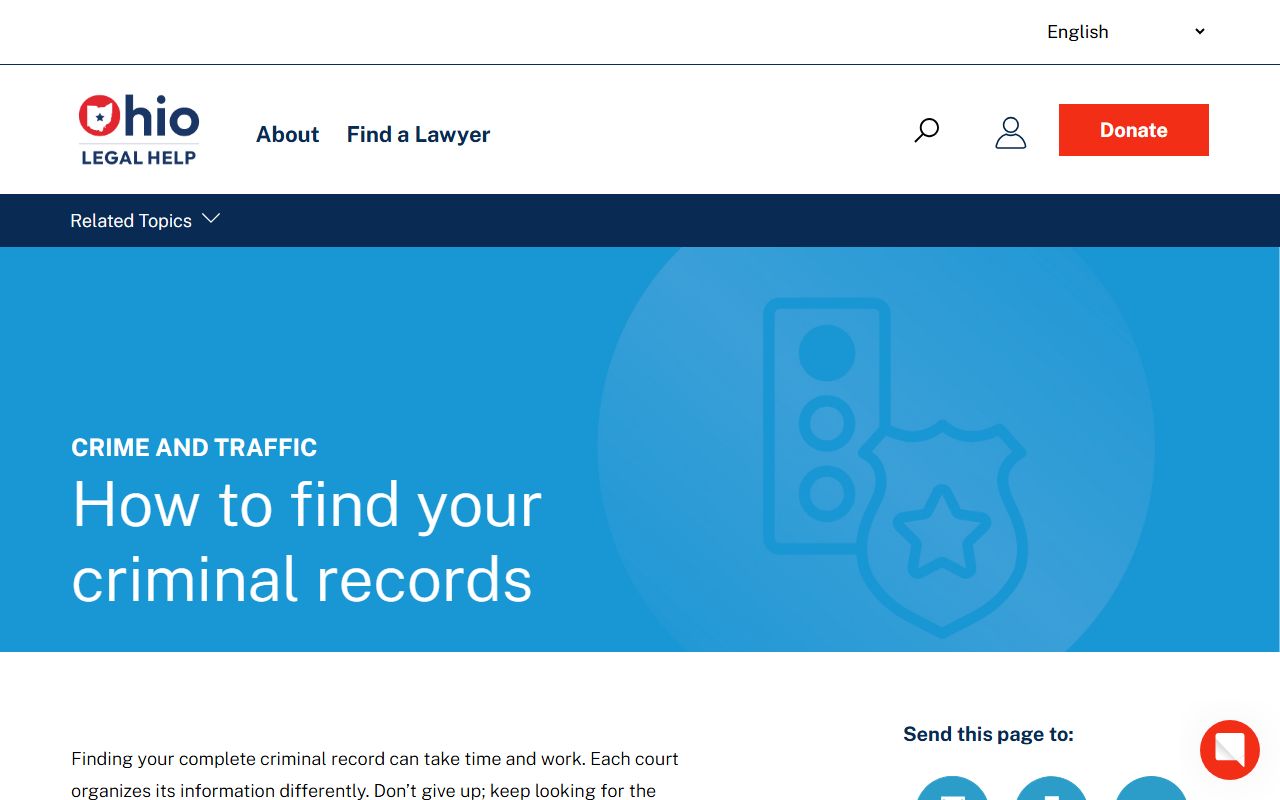
This screenshot shows the Ohio Legal Help website's guide on finding criminal records. The site gives step-by-step instructions for checking your own records across multiple courts.
For a formal background check, the WebCheck system is the state's official method. Go to a certified WebCheck location and have your fingerprints scanned. The live scan technology sends prints straight to BCI. State-only checks cost $22. If you also want FBI results, the total runs about $40 or more depending on the location. Third-party requests need signed consent from the person whose record you want. If the check is on yourself, bring a valid photo ID and the location will handle the rest.
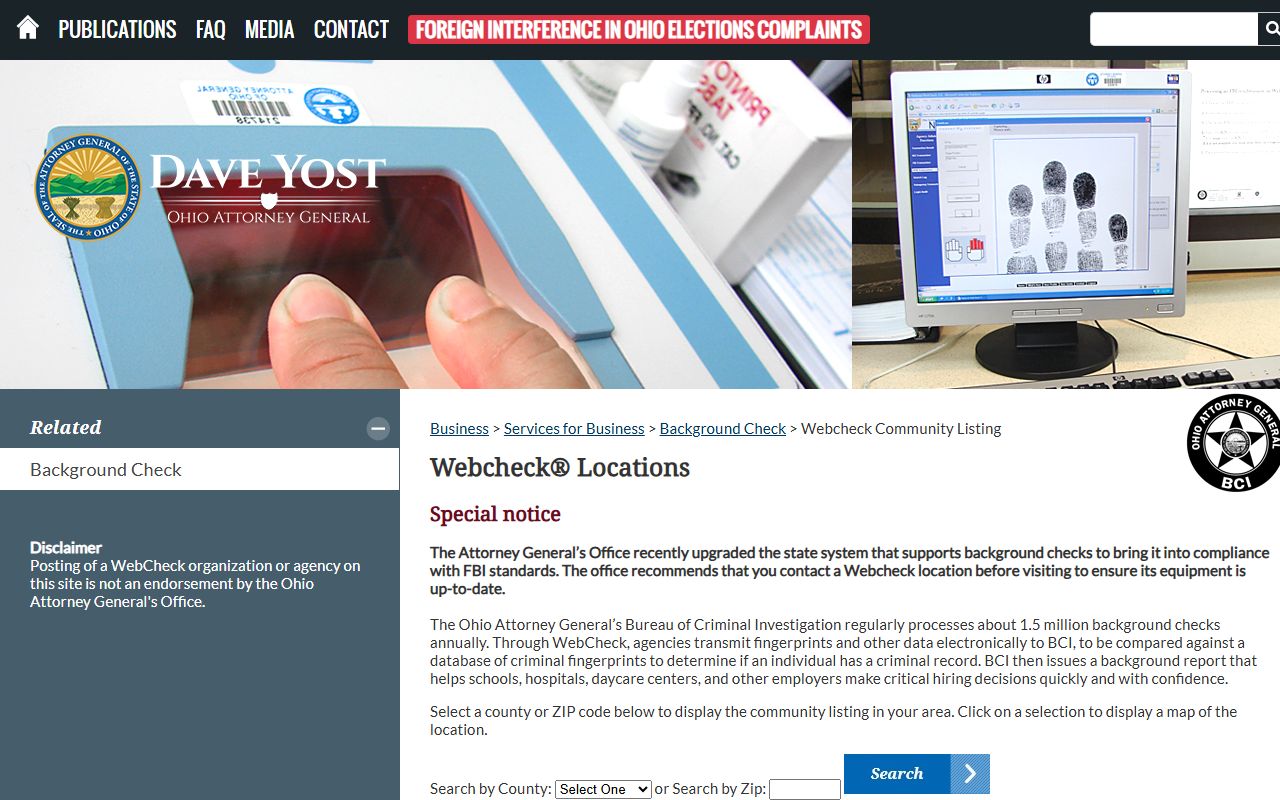
The image above shows the Attorney General's WebCheck Community Listing page. This directory lists every authorized fingerprinting location across all 88 Ohio counties.
Ohio Felony Records and the Court System
Felony cases in Ohio start at the local level. When someone is arrested on a felony charge, the case begins with a preliminary hearing at the Municipal Court. If the judge finds probable cause, the case gets bound over to the Court of Common Pleas. A grand jury then reviews the evidence and can issue an indictment. From there, the case goes through arraignment, pre-trial hearings, and either a plea or trial.
The Ohio Supreme Court sits at the top of the state's judicial system. It maintains databases for appellate-level criminal cases, including felony appeals from the district courts of appeals. The Supreme Court website also has the Rules of Superintendence that set procedures for all Ohio courts, including how criminal cases get processed and how records are managed.
This shows the Ohio Supreme Court home page. The site provides access to appellate case records and court rules that govern felony case processing statewide.
The Ohio Office of Criminal Justice Services collects crime data from law enforcement agencies through the Ohio Incident-Based Reporting System. OCJS publishes annual reports on felony crime rates, clearance rates, and offense breakdowns. The data covers violent felonies like murder, rape, robbery, and aggravated assault, plus property felonies and drug offenses. This office also coordinates with the FBI's reporting programs.
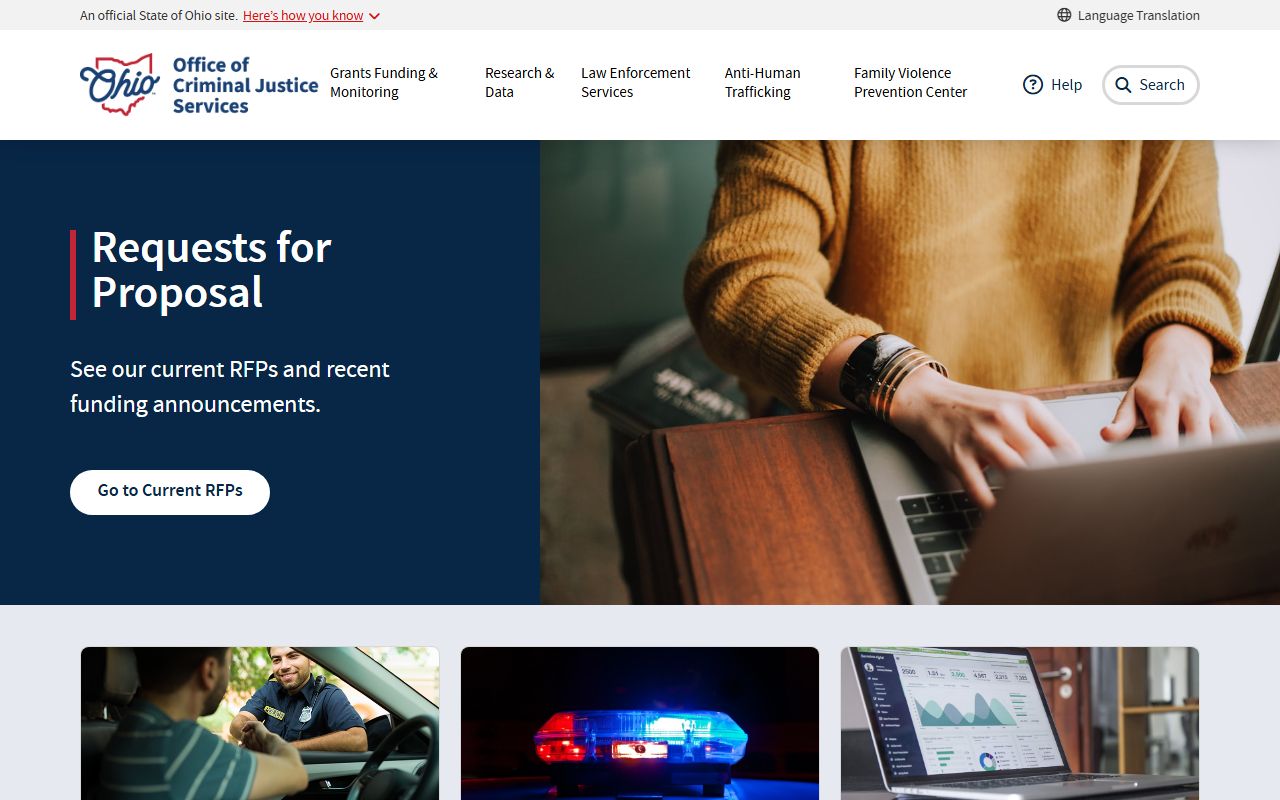
The OCJS website shown above tracks felony crime statistics across Ohio. It publishes data that helps researchers and the public understand patterns in felony activity by region.
Ohio Felony Records and Public Access Laws
Ohio has strong public records laws. Under ORC 149.43, all public records must be made available for inspection at reasonable times during business hours. Court records, law enforcement records, and clerk of courts files all fall under this rule. You do not need to give a reason for your request. You do not even need to give your name in most cases. The law says public offices must respond within a reasonable time frame.
Most felony records in Ohio are public. That includes indictments, plea documents, sentencing entries, and court dockets. Some records are exempt from disclosure. Law enforcement investigative reports can be withheld in certain situations. DNA records, medical records, and Social Security numbers are protected. Juvenile records held by the Ohio Department of Youth Services have separate privacy rules because of protections for minors.
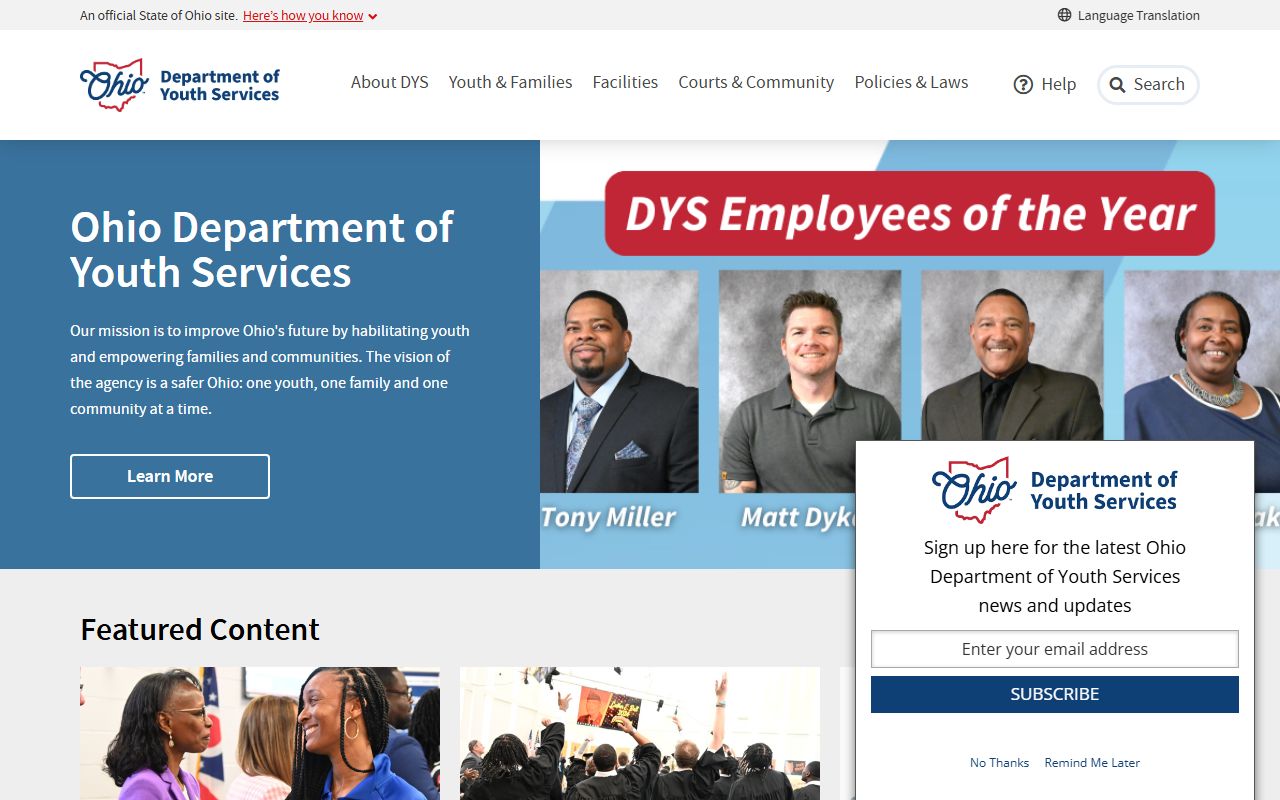
The Department of Youth Services page above handles records for juvenile offenders. Adult felony records are generally public, but juvenile records follow different access rules.
Copy fees for public records are kept low by law. Standard copies cost about $0.10 to $0.25 per page. Certified copies run higher. If a public office denies your records request, they must cite the specific legal exemption. You can appeal denials to the Ohio Court of Claims, and courts may award attorney fees if you win. The Ohio.gov Background Checks Portal explains how different types of record checks work and what information they can reveal.
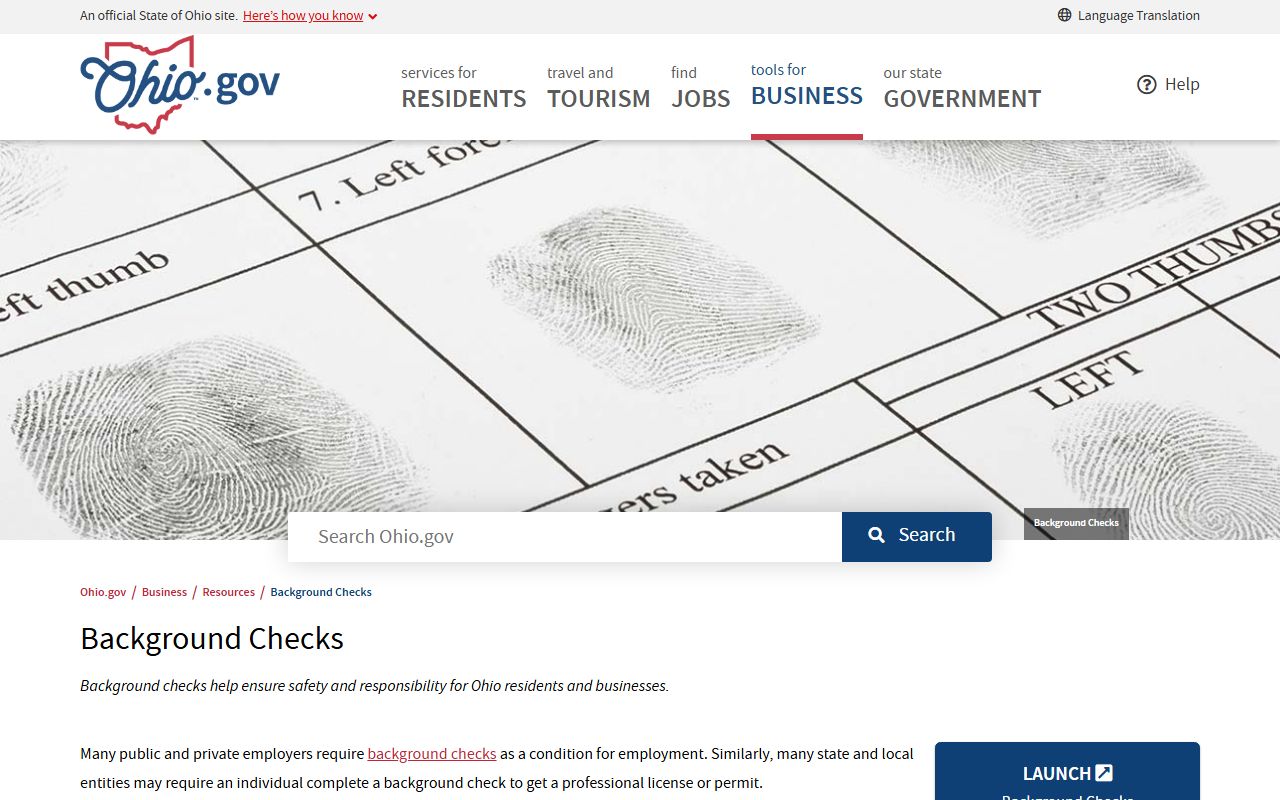
This shows the state's background checks portal, which provides guidance on the legal framework for conducting record searches in Ohio.
Ohio Felony Record Sealing and Expungement
Ohio law allows some felony records to be sealed under ORC Chapter 2953. Record sealing hides the record from most public searches. Expungement goes further and destroys it. Not every felony qualifies.
Most first through fourth degree felonies can be sealed after a waiting period. The wait is three years from the date of final discharge, which means you must finish all prison time, probation, parole, post-release control, and pay all fines and restitution first. Fifth degree felonies have shorter waits. Some felonies can never be sealed. Violent offenses, sex crimes, and cases that carried mandatory prison time are off the list. To start the process, you file a petition in the court where you were convicted. The filing fee is usually around $50, though it varies by county. A hearing follows where the judge weighs your rehabilitation against the government's interest in keeping the record open.
If the court grants sealing, the record comes off public databases. Law enforcement and certain government agencies can still see it for specific purposes. But for most practical situations, the record is no longer visible. After sealing, you can legally say "no" when asked about the conviction on most applications.
Note: Eligibility for record sealing depends on the offense type and degree. Talk to a legal aid organization or attorney to find out if a specific felony conviction qualifies.
More Ohio Felony Records Resources
The ODRC Offender Search is one of the most used tools for felony record research in Ohio. It shows current inmates, people on supervision, and those who have been released. The database includes sentence details, projected release dates, and parole status. You can reach the department at 614-387-0588 for questions about prison time or post-release control.
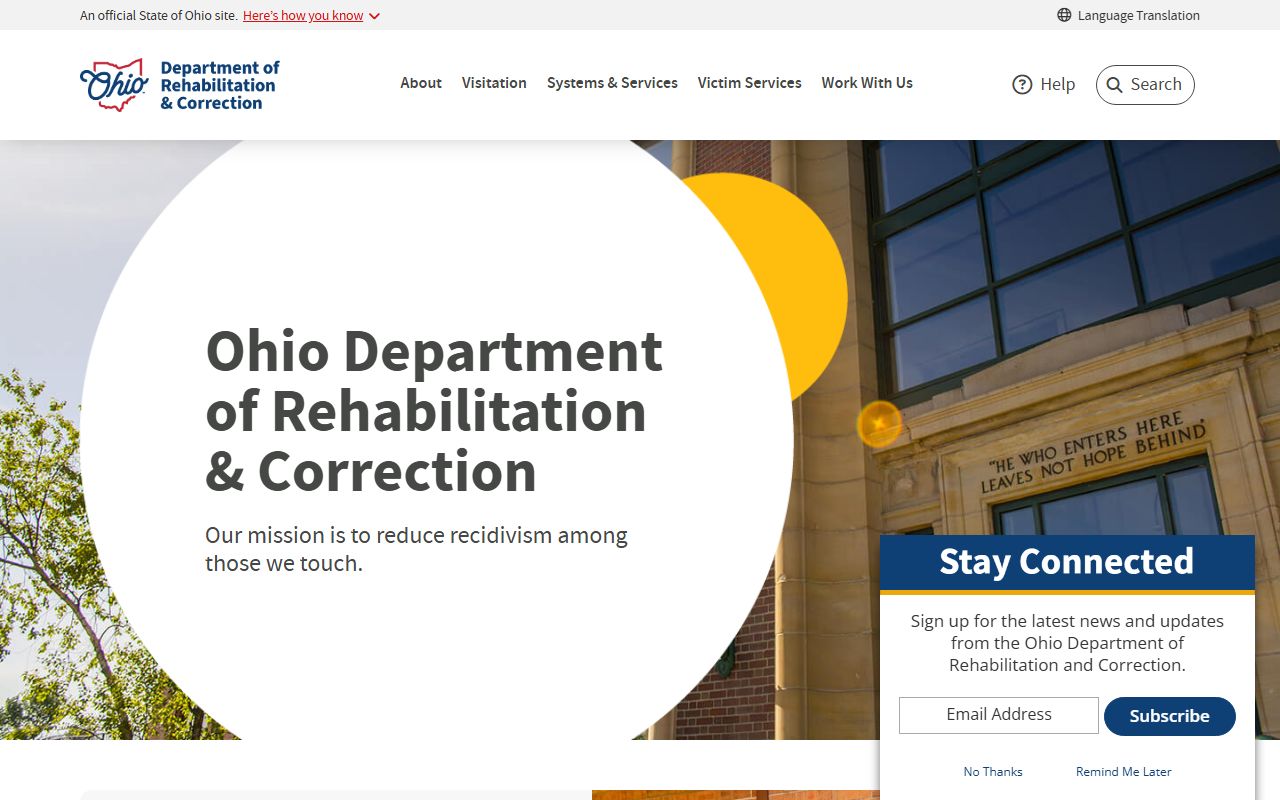
The ODRC website shown here has the official Offender Search database. It is one of the best free tools for checking on people convicted of serious felonies in Ohio.
The Ohio Bureau of Motor Vehicles also connects to the criminal records system. Warrant blocks get placed on licenses when there are outstanding arrest warrants, including felony warrants. These blocks stop you from renewing your license until the warrant is cleared. Certain felony convictions, especially felony OVI cases, lead to license suspensions too.
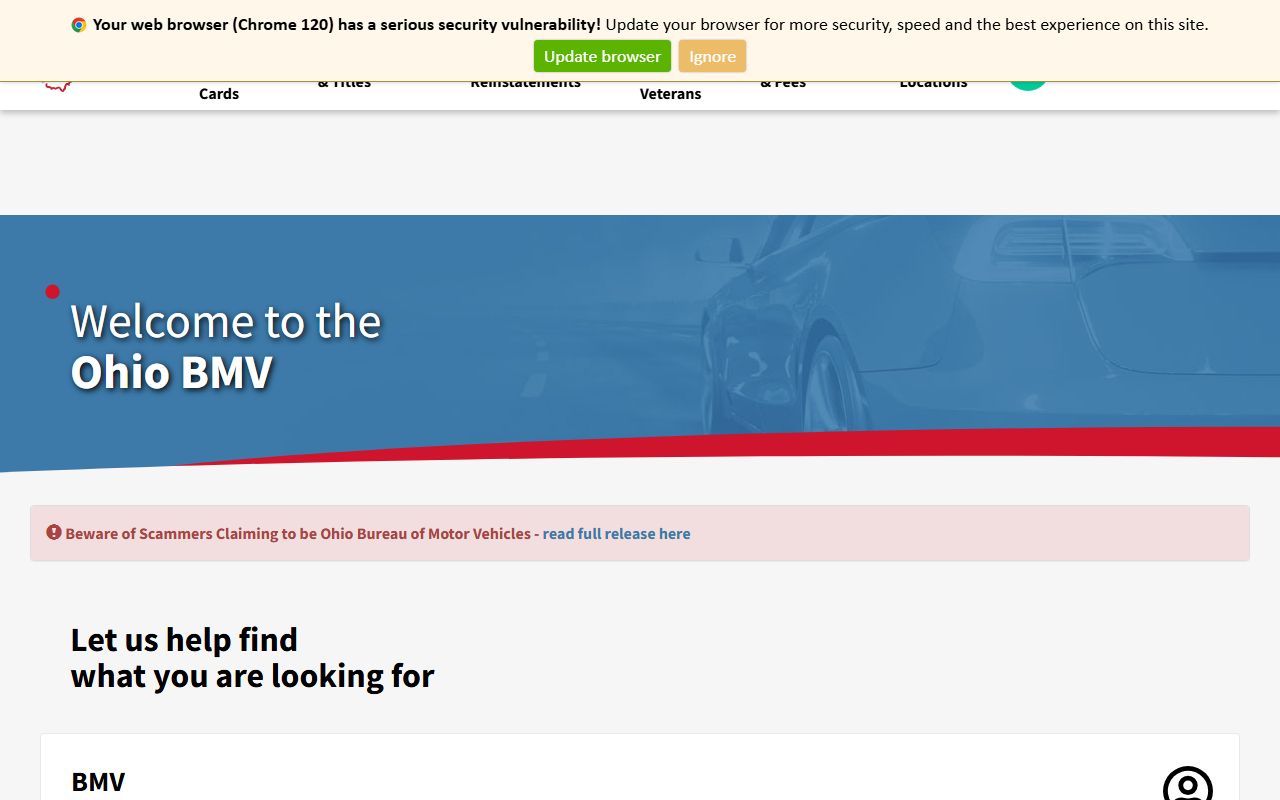
The BMV site above connects to Ohio's criminal justice system through warrant blocks and license suspensions tied to felony cases.
The Ohio Court of Claims handles appeals when a public office denies a records request. If you believe felony records were wrongly withheld, this court has jurisdiction to order disclosure.

The Ohio.gov portal shown above includes the Court of Claims search platform for cases against state agencies, including public records disputes.
Browse Ohio Felony Records by County
Each of Ohio's 88 counties has its own Court of Common Pleas that handles felony cases. Pick a county below to find local court contact info and resources for felony records in that area.
Felony Records in Major Ohio Cities
Residents of Ohio's major cities file felony cases at the Court of Common Pleas in their county. Pick a city below to find out where to search for felony records in that area.